MIDTERM QUESTION D
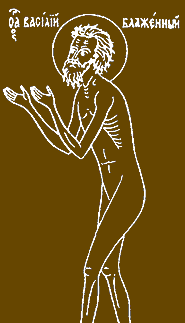
How are the holy fools related to the "regular" ascetics? What are the differences and affinities between the two? Discuss these questions, using the examples from the lives of two or more of the following: Antony, Isidora, Seration, Simeon, Andrew. Refer to more texts if you need.
#1
The tradition of the holy fools builds on Christian ascetism (as well as Greek and Old Testament traditions) but cannot be identified with them totally. The ascetics were typically somehow involved in the sacred tradition of Christianity - whether as a part of the monastic or solitary movement. They were connected (if reluctantly) to the church and were ordained priests. The holy fools on the other hand recruited often from among the lay people (Alexis, Andrew). While the ascetics sought separation from the society - allowing those who were interested in following them to find them but leaving the rest of the society alone - and served the society mostly by praying for it, the holy fools
wandered, disrupting the calm of the society and challenging its norms by intruding into the lives of others. The ascetics could be seen as mediators and protectors of the society, while holy fools were subversive and dangerous to the established authorities (clerical and lay); ascetics served the society with their spiritual powers (often prayers from afar), while the fools roamed the most "dangerous," tempting, and unspiritual places showing to people their sins at the spot where they were happening. We can see this if we compare Anthony and Simeon. Anthony struggled to get away from temptations of the society and fought demons in a dessert far away from populated areas. People respected him and took care of his needs. By secluding himself from the society, he did not challenge it directly. Simeon, who lived in a city, was exposed to the worst ills of the society and was despised by it. He feigned madness in order to be able to show how mad and corrupted the society was and he did not stop from committing some not-so-holy acts if it helped him to expose problems of the society. He was calling attention to sinful behavior by unorthodox methods as well as using prayers (a traditional tool of holy men) to avert it. I would argue, then, that the main difference between ascetics and holy fools is in the level of their practical involvement in the society and the nature (protective vs. disruptive) of their influence.